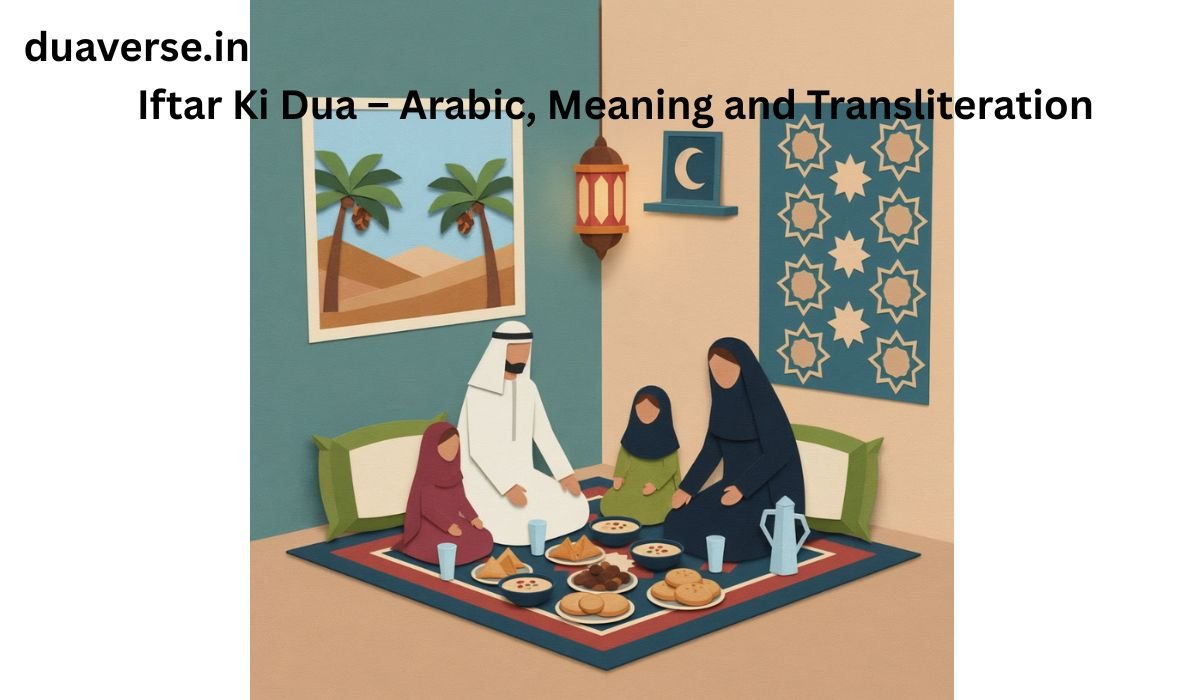
Iftar Ki Dua: Meaning, Arabic, Transliteration and Importance
Ramadan is one of the most spiritually meaningful months for Muslims around the world. From fasting throughout the day to breaking the fast with family and loved ones, every moment carries a special sense of devotion. One of the most beautiful moments is iftar, when a fasting person finally breaks their fast at sunset.
Before taking that first sip of water or eating a date, many Muslims recite the iftar ki dua as a way of remembering Allah and expressing gratitude for the blessings of food, water, and the strength to complete the day’s fast.
What Is Iftar Ki Dua?
The iftar ki dua is a supplication recited when breaking the fast. A commonly recited dua is:
Arabic:
اللَّهُمَّ لَكَ صُمْتُ وَبِكَ آمَنْتُ وَعَلَيْكَ تَوَكَّلْتُ وَعَلَى رِزْقِكَ أَفْطَرْتُ
Transliteration:
Allahumma laka sumtu wa bika aamantu wa ‘alayka tawakkaltu wa ‘ala rizqika aftartu.
Meaning:
“O Allah, I fasted for You, I believed in You, I placed my trust in You, and with Your provision I break my fast.”
The wording of this commonly recited supplication may vary in different traditions. Muslims should follow the authentic supplications and practice taught by their trusted scholars.
When Should You Read Iftar Ki Dua?
The iftar ki dua is generally recited around the time of breaking the fast, at sunset. Many people make their dua just before or while breaking their fast.
Iftar is not simply about satisfying hunger. After spending many hours without food or water, it becomes a reminder of gratitude and patience. It is also a moment when a person can pause, reflect, and turn their heart toward Allah.
A simple date, a glass of water, and a sincere prayer can make the moment feel deeply meaningful.
Why Is Iftar Special During Ramadan?
Fasting teaches much more than avoiding food and drink. It encourages patience, self-control, gratitude, compassion, and spiritual awareness.
For many families, iftar becomes a daily gathering where everyone comes together after a day of fasting. Whether it is a large family meal or a simple plate of dates and water, the moment carries its own spiritual beauty.
Reciting the iftar ki dua can make this transition from fasting to eating more mindful. Instead of immediately focusing on the meal, a person takes a moment to acknowledge Allah’s blessings.
What Should You Do Before Breaking Your Fast?
As iftar approaches, Muslims often spend time making personal duas and remembering Allah. You can use these moments to pray for your family, health, forgiveness, guidance, peace, and the well-being of others.
When the time for iftar arrives, you can break your fast and recite the appropriate supplication according to the practice you follow.
The important thing is sincerity. A dua does not have to be complicated or lengthy. Speaking to Allah with a sincere heart is at the center of supplication.
Conclusion
The iftar ki dua adds a beautiful spiritual dimension to the end of a day of fasting. It reminds us that the food and water before us are blessings and that fasting itself is an act of worship and devotion.
As Ramadan brings families and communities together, taking a few moments for dua before or during iftar can help us slow down, express gratitude, and remember the deeper purpose of fasting.
FAQs About Iftar Ki Dua
1. What is the iftar ki dua?
A commonly recited supplication is: Allahumma laka sumtu wa bika aamantu wa ‘alayka tawakkaltu wa ‘ala rizqika aftartu. It expresses devotion to Allah and gratitude for His provision.
2. When should I read iftar ki dua?
It is generally recited around the time of breaking the fast at sunset. Follow the timing and practice recommended by your trusted Islamic authority.
3. Can I make my own dua during iftar?
Yes. You can make personal supplications and ask Allah for forgiveness, guidance, blessings, and anything good for yourself and others.
4. Is iftar ki dua mandatory?
The specific wording of a commonly recited iftar dua should not be treated as a requirement for the validity of the fast unless supported by the particular school or scholarly authority you follow.
5. What is the meaning of iftar ki dua?
Its commonly understood meaning is that the person fasted for Allah, believed in Him, relied upon Him, and is breaking the fast with the provision Allah has given.